
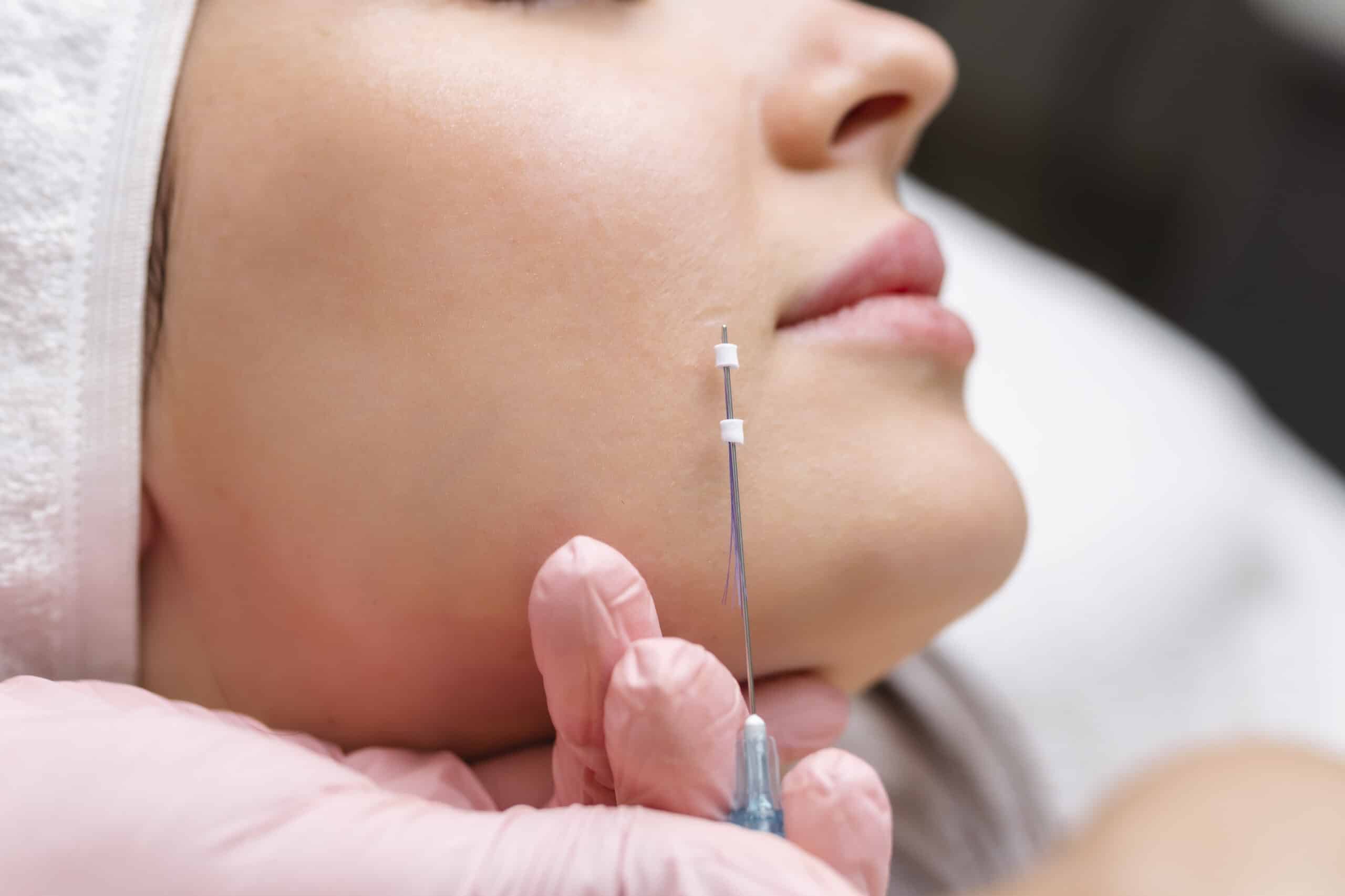
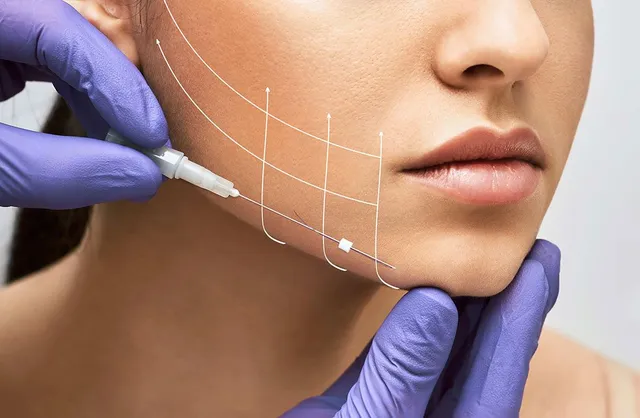
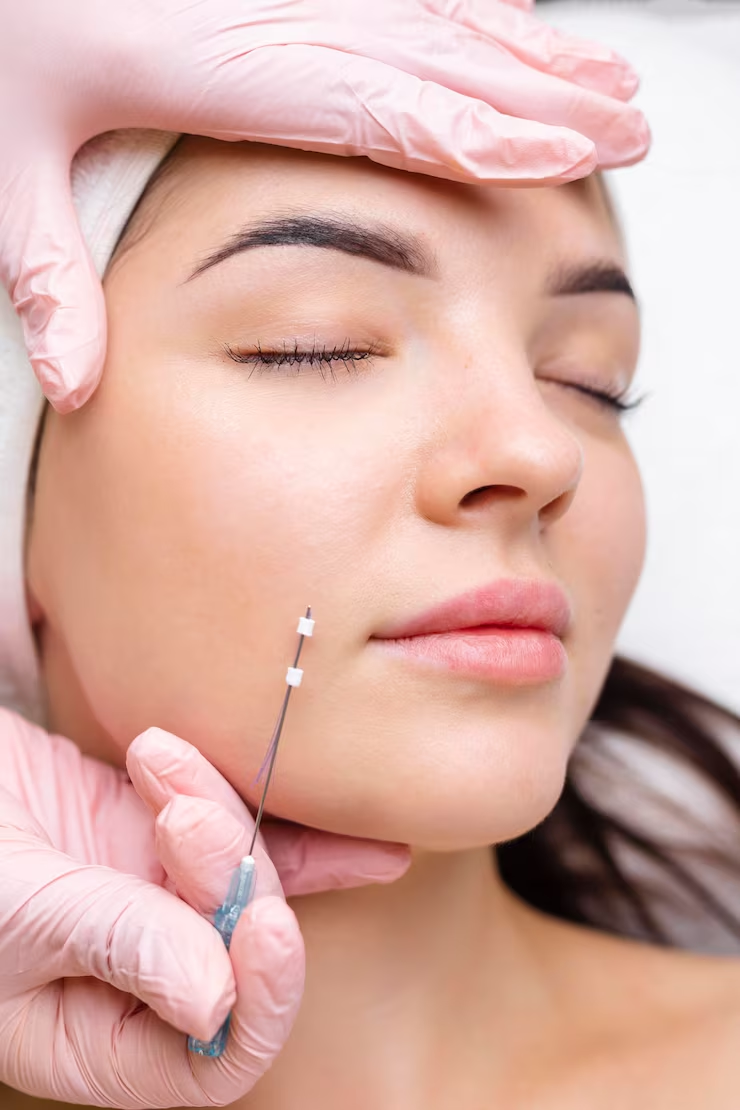
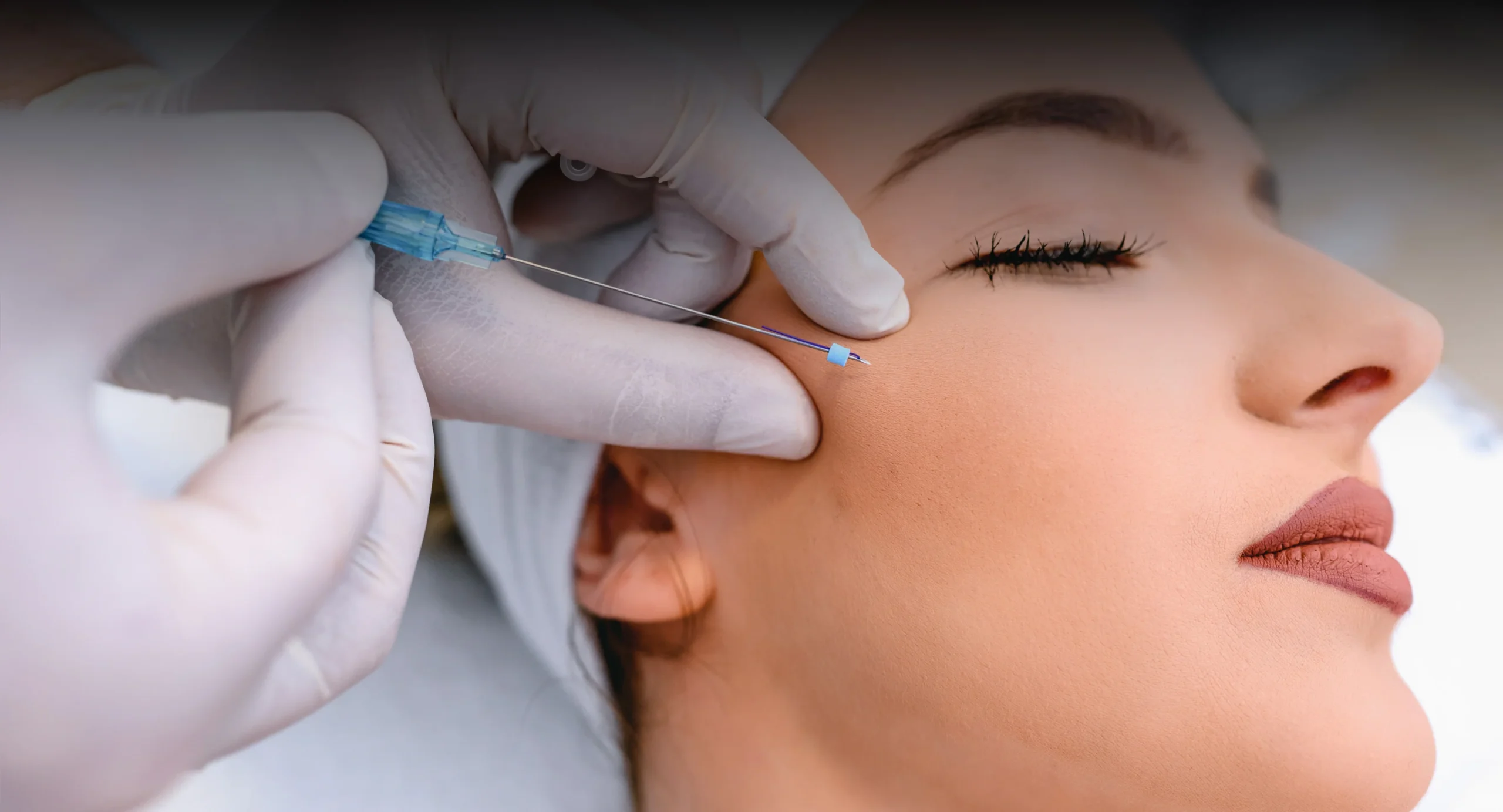
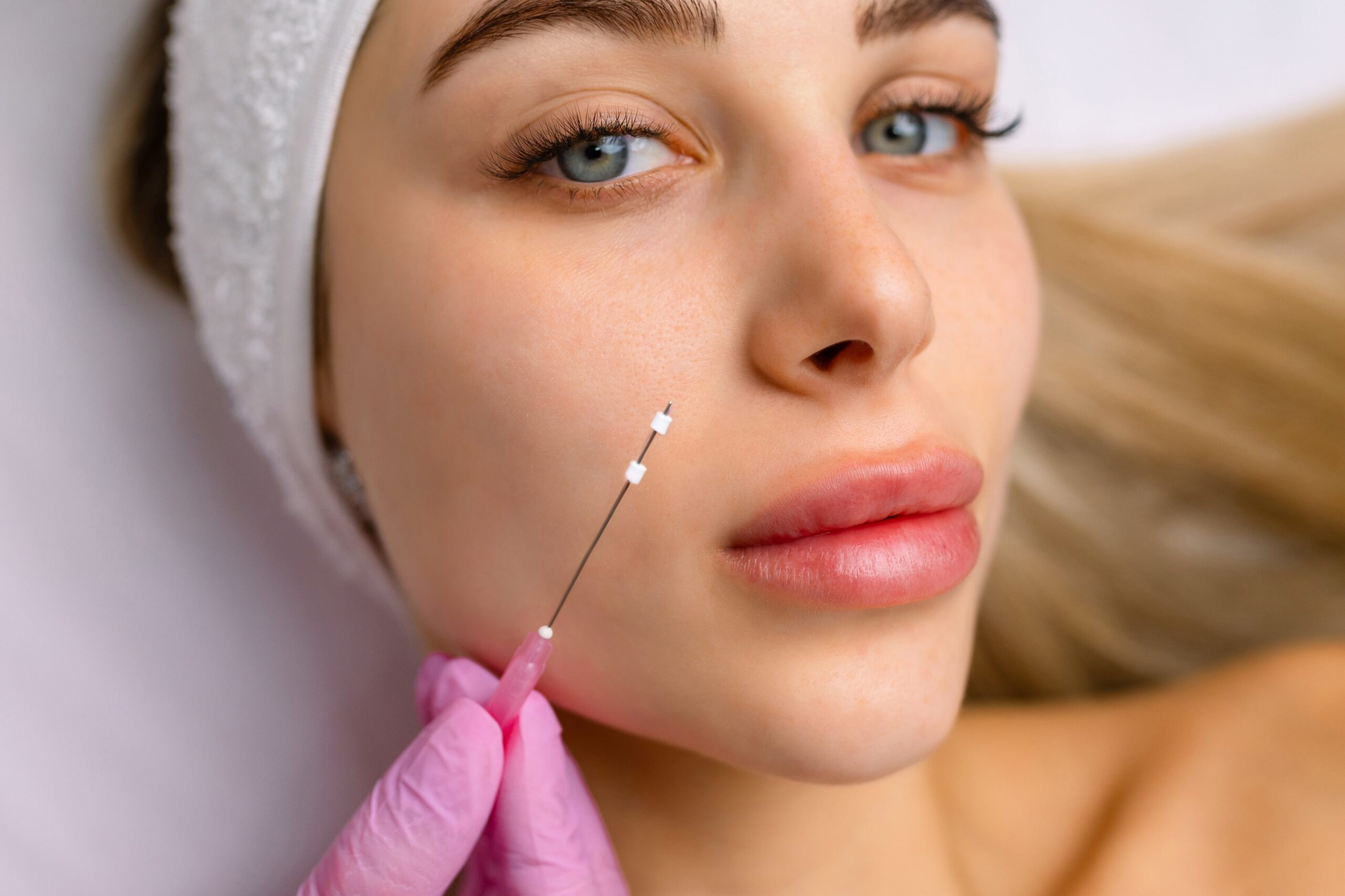
A threadlift is a minimally invasive cosmetic procedure designed to lift and tighten sagging facial skin without traditional surgery. Tiny, absorbable threads are inserted under the skin to gently pull and reposition facial tissues. Unlike surgical facelifts, threadlifts provide subtle, natural-looking results with minimal downtime.
Threads work in two ways:
Modern threads may be coated with hyaluronic acid or made from biocompatible polymers, promoting long-term skin regeneration while gradually dissolving over months.
Threadlifts use tiny, dissolvable threads to lift and tighten the skin. The material of the thread affects how long it lasts and how it works. The three main materials are PDO, PLLA, and PCL:
In short: PDO is quick and gentle, PLLA lasts longer and strengthens skin, and PCL gives the longest and most comfortable lift. Your doctor will choose the best type based on your skin and goals.
A threadlift is a minimally invasive procedure, while a surgical facelift is a major surgery. Threadlifts have a short recovery time of 1–3 days, compared to 2–4 weeks for a surgical facelift. The results of a threadlift usually last 12–24 months, whereas surgical facelifts can last 5–10 years. Threadlifts leave minimal scarring and carry a low risk, while surgery may cause visible scars and has higher surgical risks. Threadlifts are ideal for people looking for subtle lifting and skin rejuvenation, while surgical facelifts are better for those with more severe sagging or deep wrinkles who want a dramatic, long-lasting result.
Threadlifting is generally safe when performed by a qualified practitioner. Common mild side effects include temporary swelling, bruising, or minor discomfort. Serious complications are rare.
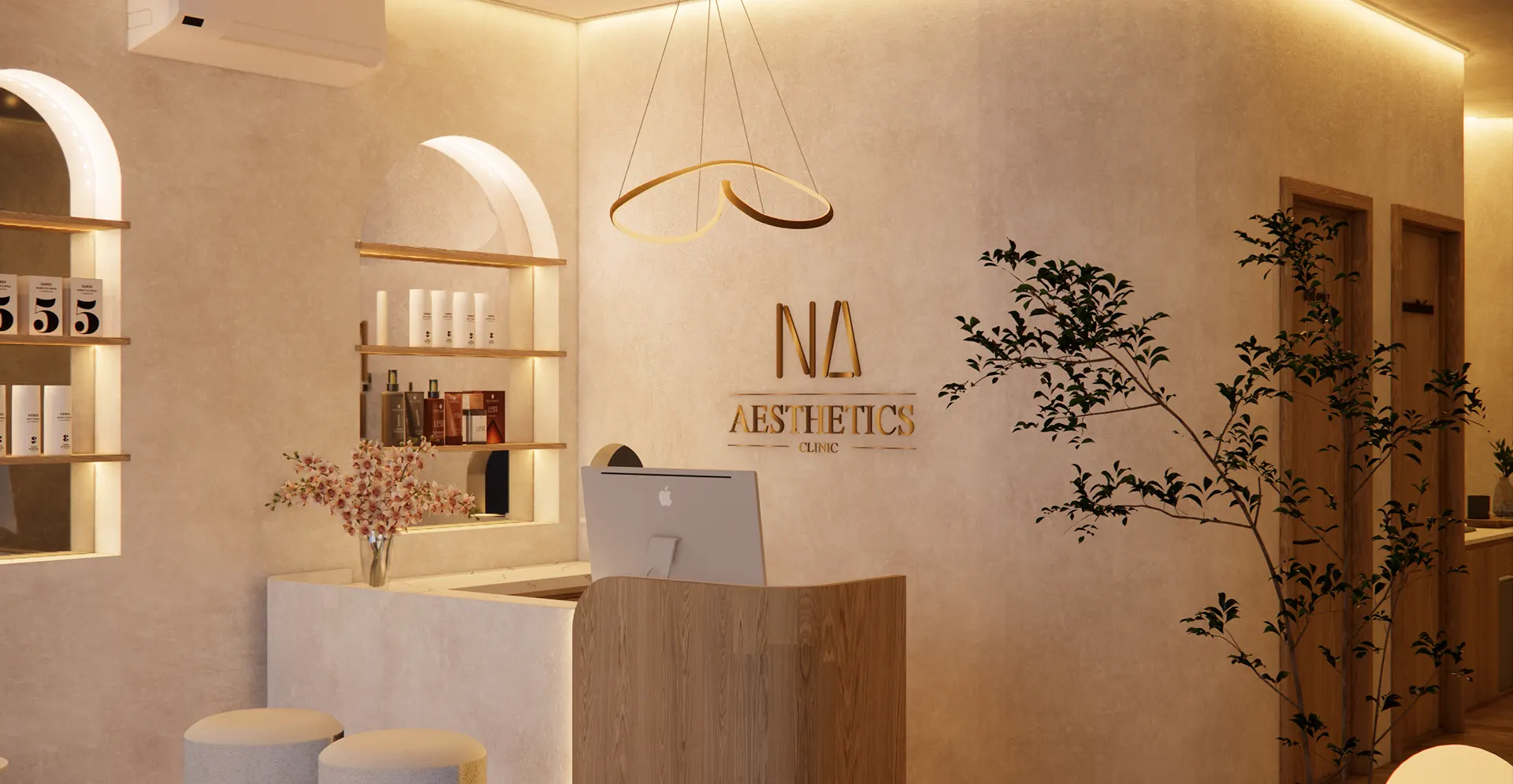
At NA Clinic Bali, every threadlift is personalized to each patient. Choosing the right candidate is very important, so a consultation with our doctor is the first step. During the consultation, the doctor will recommend the safest and most suitable treatment based on your skin, aging concerns, and goals. Using high-quality threads and expert techniques, we deliver natural-looking results with minimal downtime. Our clinic also emphasizes post-treatment care and follow-up to ensure your results last and your skin stays healthy.
References
Discover proven therapies that help combat fine lines, wrinkles, and restore youthful vitality to your skin.
Discover proven therapies that help combat fine lines, wrinkles, and restore youthful vitality to your skin.
Discover proven therapies that help combat fine lines, wrinkles, and restore youthful vitality to your skin.
Discover proven therapies that help combat fine lines, wrinkles, and restore youthful vitality to your skin.

Schedule Consultation